Anti-seizure Medication
Specific
drugs
Also see: Anti-seizure Medication Chart
|
Drug |
Dose |
Dose advice |
Adverse - neuro |
Adverse other |
Metabolism |
Effect on other meds |
Effect of other meds |
Mechanism |
Formulation |
|
Brivaracetam (Briviact) |
Start:
50mg
BD Maintenance: 50-100mg
BD Reduction
in focal seizures: 20%
50mg/d 24%
100mg/d 24%
200mg/d |
Renal
Impairment: -
21% increased level, no change usually required -
Not tested in ESRD Hepatic
impairment: -
50% increase in level, consider dose reduction Enzyme
Ind: -
Minor effect (~20%) |
(100mg
vs placebo%) Sedation
(16 v 8.5%) Fatigue
(7.6 vs 3.7%) Dizziness
(9 v 7%) Irritability
(3.2 v 1.1%) Insomnia
(2.9 v 1.5%) Anxiety
(2.0 v 1.3%) Depression
(2.0 vs 1.1%) Any
psychiatric AE (13 vs 8%) Headache
(same as placebo) |
(100mg
vs placebo%) Nausea
(4.2 v 2.4%) |
CYP2C19
then renal excretion T1/2
– 9hours |
Inc
PHY (20%) |
EI
dec (~20%) VPA
Inc 11% |
SV2
A receptor agonist (15-30x
affinity c.f. levetiracetam) |
|
|
Cannabidiol (CBD) |
Start: 2.5mg/kg Maintenance: 10-20mg/kg |
|
Sedation |
Diarrhoea Inc
LFTs |
CYP3A4,
2C19 Inhibits
2C19) T1/2
~60hours Effective
17hrs |
Inc
CLB (~3x) |
|
|
|
|
Carbamazepine (Tegretol)
|
Start:
100-200mg/day Inc
200mg q2/52 Maintenance: 600-1800mg/d 15-35mg/kg
child Sz
free (Kwan): 50%
on 400mg 85%
on 600mg 95%
on 800mg |
|
Sedation (12%) Dizzy/Vertigo (4%) Ataxia
(2%) Headache
(5.5%) Diplopia (1%) Depression
(3.7%) Nausea |
Rash Mild
- 10% Severe/SJS
– predicted by: (HLA)-B*1502
(15% in SE Asia) Nausea
2% Wt gain 2% Aplastic anaemia and
agranulocytosis –
2-5 /million/yr Leukopenia
(usu mild) Thrombocytopaenia Eosinophilia Hepatotoxicity Hyponatraemia |
CYP3A4 Induces
multiple CYP enzymes T1/2
- 25-65hrs then with induction: T1/2
– 12-17hrs |
Dec
VAL Dec
LTG Dec
PHY Dec
OCP |
PHY
dec |
Sodium
channel blocker |
Immediate
release: 100mg 200mg Modified
release: 200mg
CR 400mg
CR Liquid: 100mg/5ml
liquid, 300ml |
|
Clobazam
(Frisium) |
Start: 5mg bd BD Maintenance: 10-20mg BD |
|
Sedation |
Rash |
CYP3A4, 2C19 Weak 3A4 inducer T1/2 36-42 |
|
CBD inc |
GABA-A receptor antagonist |
10mg 50tabs (Non-PBS) |
|
Clonazepam (Rivotril) |
Start: 0.25-0.5mg BD Maintenance: Up to 20mg/day |
|
Sedation |
|
|
|
EI dec |
|
|
|
Ethosuxamide (Zarontin) |
Start: 250mg
BD Maintenance: 20-40mg/kg Max:
1.5g daily |
|
Worsen GTCS Drowsiness Dizziness Ataxia Headache Euphoria |
Anorexia N+V Epigastric pain Weight loss Hiccup Rash/SJS Blood disorders |
CYP 3A4, 2E1 T1/2 ~60hrs |
|
|
T-type Ca channels |
250mg 200capsules, 2 rpts (PBS) 250mg/5ml 200ml, 5 rpts, (PBS) |
|
Gabapentin (Neurontin) |
Effective from 900mg daily, slight increase in
efficacy up to 2400mg daily |
|
Sedation
(12%) Dizziness
(6%) Ataxia (6%) Memory
(2-6%) |
Wt gain (2-4%) |
RENAL T1/2 – 6hrs |
|
Morphine Inc |
Calcium channel |
Capsules 100tabs x5rpts 100mg 300mg 400mg Tablets 100tab x5rpts 600mg 800mg |
|
Drug |
Dose |
Dose Advice |
Adverse - neuro |
Adverse other |
Metabolism |
Effect on other meds |
Effect of other meds |
|
Formulation |
|
Lacosamide (Vimpat) |
Start: 50mg bd Maintenance 100mg – 200mg bd 50% responder rate: 22% placebo 34% 200mg/day 40% 400mg/day |
Renal Impairment: - Reduce dose Enz Inducers: - 25% reduction, consider increased dose Record ECG prior to Rx |
Dizziness (30%) Vertigo, balance disorder Diplopia (7%) No cognitve effects |
Nausea, vomiting and tremor. Mild PR prolongation (CI in heart disease or with type I
anti-arryhtmics) ECG
prior to Rx. |
95% excreted in urine Also: CYP – however is not a major inhibitor or inducer T1/2 – 15hrs |
Nil significnat |
Levels decreased 25% when given with other enzyme
inducers |
Sodium channel - Enhances slow channel inactivation |
50mg 100mg [56] Rp 5 150mg [56] Rp 5 200mg [56] Rp 5 |
|
Lamotrigine (Lamictal)
|
150-600mg/d 25mg
2/52 50mg
2/52 Then
inc. by 50mg/week With
VPA – half the rate With
inducers – double
the rate. Sz
Free (Kwan) –all types epilepsy: 20%
100mg 85%
200mg 95%
300mg |
Valproate: Halve the dose and increase at half the
rate Oestrogen/OCP: Consider increased dose (up to 50%) Enzyme
inducer: Increase dose |
Sedation
(8%) Headache
(5%)* Dizziness (4%) Ataxia (4%) Diplopia (1%) Insomnia |
Skin rash (5-10%) SJS (1/500-1/1000) |
|
Nil effect on other meds. OCP – inc. Breakdown 2x |
VPA decreases metabolism CBZ, OXC, PHY, PHB, PRI Inc. metabolism |
Sodium channel blcoker Enhances rapid inactivation Inhibits Ca2+ channels |
5mg 25mg 50mg 100mg 200mg Chewable/dispersable (not scored) |
|
Drug |
Dose |
Dose Advice |
Adverse - neuro |
Adverse other |
Metabolism |
Effect on other meds |
Effect of other meds |
|
PBS |
|
Levetiracetam (Keppra, Levi) |
Start: 250-500mg bd Seizure freedom by dose (Brodie): 40% 1000mg 54% 2000mg 57% 3000mg |
Renal impairment: - Reduce dose by 50% if severe |
Sedation (~16%) Aggression (9%) Depression (5%) |
|
|
|
|
SV2A (synaptic vesicle effect) |
Tablets
(scored) [60] Rp5 250mg 500mg 1000mg Liquid form available |
|
Oxcarbazepine (Trileptal) |
Start: 300mg bd Seizure freedom by dose: 26% 600mg/d 40% 1200mg/d 50% 2400mg/d |
|
Dizziness Fatigue Diplopia Somnolence Adverse effects by dose (in excess of placebo): 8% 600mg/d 14% 1200mg/d 22% 2400mg/d |
Rash - Increased risk with HLA B*1502 Hyponatraemia - Severe ~2.5% Vomiting |
Hepatic (No auto-induction like CBZ) T1/2 - 9 |
Dec
VAL Dec
LTG Dec
PHY Dec
OCP |
PHY
dec |
Sodium channel Enhances rapid inactivation Calcium channel block |
Tablets
Scored [100] Rp 5 150mg 300mg 600mg |
|
Perampanel (Fycompa) |
Start: 2mg/day Maintenance: 4-8mg/day Max: 12mg/day (high dose for use in conjunction with
enzyme inducers) 50% responder rate (TCS): Placebo 19% 29% 4mg/d 35% 8mg/d 35% 12mg/day |
Enzyme inducers: - Consider higher dose (10-12mg/d) Titrate slowly to reduce adverse effects |
On 8mg v placebo%: Dizziness (32 v 9%) Somnolence (16 v 7%) Fatigue (8 v 5%) Irritability (7 v 3%) Headache (10%, P 8.6%) Ataxia (6%, P:0%) |
On 8mg v placebo%: Nausea (6
v 5%) Weight gain (15 v 7%) |
Peak 15-120min T1/2 70hours 95% protein bound Steady state takes 2-3 weeks Liver- CYP3A4 Not a major inducer or inhibitor 70% of metabolites excreted in faeces |
|
CBZ, OXC, PHY increase metabolism PHB, PRIM no effect |
AMPA antagonist |
2mg 7
tabs, 1rpt All
28 tabs, 5 rpts 4mg 6mg 8mg 10mg 12mg |
|
Phenobarbital |
Start and titrate very slowly e.g. 15mg od, add
15mg every 2/52. Maintenance 60-240mg once daily at night |
|
|
|
Hepatic and Renal (25-50%) T1/2 -
79hrs Strong CYP 3A4 inducer |
Dec many drugs |
VPA dec |
GABA-A inhibitor |
30mg tablet [200] Rp 4 Scored |
|
Phenytoin (Dilantin)
|
Start 300-400mg/d 3-6mg/kg
adult 4-8mg/kg
child |
|
Dizziness Diplopia Ataxia Incoordination Confusion (cerebellar
degeneration) Worsen
Abs |
Gum
hyperplasia Lymphadenopathy Hirsutism Osteomalacia Facial
coarsening Skin
rash |
CYP
2C9 then 2C19 T1/2
– 22hrs |
Dec
many drugs (EI) |
EI
dec OXC,
TPM Inc |
|
Tablet,
chewable 50mg
[200] Rp 2 Liquid
30mg/5ml 500ml Capsule(Phenytoin Sodium) 30mg
[200] Rp 2 100mg
[200] Rp 2 |
|
Pregabalin (Lyrica) |
Effective from 150mg daily up to 600mg daily |
|
|
Weight gain |
Renal excretion T1/2 – 6 hours |
|
|
Calcium channel blocker |
|
|
Primidone |
Start: 100-125mg QID Maintenance: 750-2000mg/day |
|
|
|
Metabolised to phenobarbital T1/2 – 12 (+79hrs for derived PB) |
|
|
GABA-A |
|
|
|
|
|
|
|
|
|
|
|
|
|
Drug |
Dose |
Dose advice |
Adverse - neuro |
Adverse other |
Metabolism |
Effect on other meds |
Effect of other meds |
|
PBS |
|
Retigabine |
|
|
|
|
|
|
|
K CNQ +, M-current |
|
|
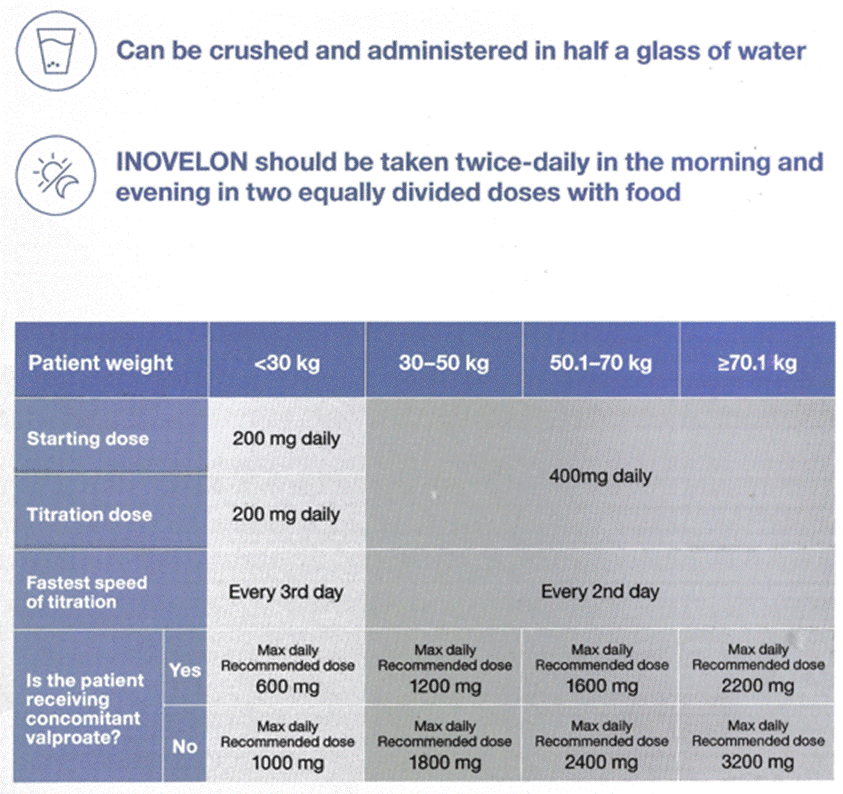
Rufinamide (Ineolon) |
Start: 200-400mg BD Maintenance: Max 3200mg/day |
|
|
|
Induced 3A4 |
Dec CBZ Dec LTG Inc PB Inc PHY Inc VPA |
EI Dec |
|
|
|
Sulthiame (Ospolot) |
|
|
|
|
|
|
|
|
50mg [200], 2rpt, (PBS) 200mg [200], 2rpt, (PBS) |
|
Tiagabine (Gabitril) |
|
|
|
|
|
|
|
GABA
(+) |
PBS
code 4928 5mg [50], 5rpt 10mg [50], 5rpt 15mg [50], 5rpt |
|
Topiramate
(Topamax) |
Start: 25-50mg
daily Titrate:
25-50mg weekly Maintenance: 100mg
daily (Avg.
dose for control ~175mg) Max: 500mg
daily |
|
Sedation
(11%) Agitation
etc. (10%) Depression
(8%) Memory
problems (7%) Paraesthesia
(7%+) Confusion
(6%) Behaviour
change (6%) |
Weight
loss (8% of pts) Kidney
stones (1.6%) Acute
Myopia/Glaucoma Decreased
sweating Metabolic
acidosis |
RENAL
(70%) +LIVER |
Dec
OCP (>200mg/day) Inc
PHY (rarely) |
PHY
and CBZ may increase TPX |
Glutamate
reduction Na
and Ca |
Treatment of: Seizures 5516 Tablet
25mg, 50mg, 100mg, 200mg [60] Rp 5 Seizures and unable to
take tablets 5173 Capsules
(Sprinkle) 15mg, 25mg, 50mg [60] Rp 5 Migraine 5325 Tablet
25mg, 50mg [60] Rp5 |
|
Valproic acid (Epilim) |
750mg-2g/d BD/QID 20-60mg/kg T1/2
- 7-17hrs Sz
Free (Kwan) –all types epilepsy: 15% 500mg 85%
1000mg 95%
1500mg |
|
Ataxia Sedation Tremor |
Teratogenicity
Hepatotoxicity
(first 6 months) Thrombocytopenia GIT
irritation Wt gain Transient
alopecia Hyperamonaemia Pancreatitis
(any time) SJS/TEN/DRESS |
Liver
-
Glucuronidation -P450
Peak
4hrs (7hrs enteric) T1/2
8-20hrs |
Inc
LTG Inc
PHY ?Inc CBZ |
CBZ
dec PHB
dec |
Inhibits
sodium and calcium channels Enhances
GABA |
100mg
Scored 100tabs,
2 rpts Max
2 packets at once 200mg
Enteric (not scored) 500mg
Enteric (not scored) 100tabs,
2 rpts Max
2 packets at once 200mg/5ml
Liquid |
|
Vigabatrin (Sabril) |
Start: 0.5g/week Maintenance: 2g/day (max 4g) Reduce dose in renal impairment Focal sz only +/- Infantile spasms |
|
Worsening of generalised epilepsies Visual field defect in 20-40% ** Requires VF’s ** Diplopia Fatigue Sedation Mania Encephalopathy Movement disorders |
|
|
|
|
GABA
+ |
PBS
Code 4929 Sz not controlled by other Rx 500mg [100] Rp 5 Powder for liquid – 60 x 500mg sachets |
|
Zonisamide (Zonegran) |
Monotherapy 100mg od, increase by 100mg every 1-2 weeks. Adjunctive 25mg bd 1-2 wks 50mg bd 1-2 wks Then inc. By 100mg/wk Maintenance: 300-500mg daily Dec sz freq: 100mg – 18% 300mg – 42% 500mg – 50% |
|
Dizziness (~10%) Tiredness (<10%) Neuropsychiatric (all types - ~6%) |
Increased Urea and Cr Decreased sweating Weight loss (<7%) Metabolic acidosis – renal stones etc. |
|
Nil |
Inc. Dose may be needed if also taking CBZ, PHY |
Na+,
Ca2+ Inc
GABA Dec
Glutamate |
25mg [56], 5rpts 50mg [56], 5rpts 100mg [56], 5rpts |
* Probably no
significnat difference from placebo.
Anticonvulsant Identification Chart
|
|
Dose
equivalence (mg) |
IV |
Clearance
t1/2 (Avg) |
Clearance
t1/2 (range) |
|
|
|
|
|
|
Alprazolam |
0.5 |
|
9 |
6-12 |
|
|
|
|
|
|
Clonazepam |
0.5 |
0.5 |
40 |
40 |
|
|
|
|
|
|
Clobazam |
20 |
|
35 |
12-60 |
|
|
|
|
|
|
Diazepam |
10 |
|
60 |
20-100 |
|
|
|
|
|
|
Lorazepam |
1 |
1 |
15 |
10-20 |
|
|
|
|
|
|
Oxazepam |
20 |
|
10 |
4-15 |
|
|
|
|
|
|
Midazolam |
|
2 |
|
|
|
|
|
|
|
|
Temazepam |
20 |
|
15 |
8-22 |
|
|
|
|
|
Mechanism of action
|
Decreased excitation |
Increased inhibition |
|||||
|
Drug/Primary target† |
Na+ channels |
Ca2+ channels |
SV2A |
Glutamate |
GABA |
K+ channels |
|
Carbamazepine |
● |
|||||
|
Phenytoin |
● |
|||||
|
Eslicarbazepine |
● |
|||||
|
Lamotrigine |
● |
|||||
|
Oxcarbazepine |
● |
|||||
|
Rufinamide |
● |
|||||
|
Lacosamide |
● |
|||||
|
Zonisamide |
● |
● |
||||
|
Topiramate |
● |
● |
● |
|||
|
Pregabalin |
● |
|||||
|
Gabapentin |
● |
|||||
|
Vigabatrin |
● |
|||||
|
Benzodiazepines |
● |
|||||
|
Phenobarbital |
● |
● |
● |
|||
|
Valproate |
? |
? |
? |
|||
|
Levetiracetam |
● |
|||||
|
Retigabine |
● |
|||||
|
Perampanel |
● |
|||||
· From AED lecture by Kwan
Drug Interactions/Pharmacokinetics/dynamics
|
ASM |
Elimination |
Action
on cytochromes |
|
Phenytoin |
Hepatic |
Inducer |
|
Carbamazepine |
Hepatic |
Inducer |
|
Valproate |
Hepatic |
Inhibitor |
|
Oxcarbamazepine |
Hepatic (+renal) |
Weak - mixed |
|
Zonisamide |
Hepatic (+renal) |
Nil (Weak –mixed) |
|
Lacosamide |
Hepatic (+renal) |
Weak - mixed |
|
Topiramate |
Renal (+hepatic) |
Weak – mixed |
|
Leviteracetam |
Renal (+hepatic) |
Nil |
|
Gabapentin |
Renal |
Nil |
|
Pregabalin |
Renal |
Nil |
|
Lamotrigine |
Hepatic |
Nil |
|
Perampanel |
Hepatic |
Nil |
|
|
Induces CYP |
Inhibits CYP |
Metabolized
by CYP |
Induces UGT |
Inhibits UGT |
Metabolised
by UGT |
|
Carbamazepine |
2C9, 3A |
No |
1A2, 2C8, 2C9, 3A4 |
Yes |
No |
No |
|
Gabapentin |
No |
No |
No |
No |
No |
No |
|
Lamotrigine |
No |
No |
No |
Yes |
No |
Yes |
|
Levetiracetam |
No |
No |
No |
No |
No |
No |
|
Oxcarbazepine |
3A4/5 |
2C19 |
No |
Yes |
Weak |
Yes |
|
Phenobarb |
2C, 3A |
Yes |
2C9, 2C19 |
Yes |
No |
No |
|
Phenytoin |
2C, 3A |
Yes |
2C9, 2C19 |
Yes |
No |
No |
|
Perampanel |
No |
No |
3A4 |
?No |
?No |
?No |
|
Tomiramate |
No |
2C19 (mild) |
No |
No |
No |
|
|
Valproate |
No |
2C9 |
2C9, 2C19 |
No |
Yes |
Yes |
|
Zonisamide |
No |
No |
3A4 |
No |
No |
Yes |
|
|
|
|
|
|
|
|
|
|
|
|
|
|
|
|
|
|
|
|
|
|
|
|
|
|
T ½ |
Peak |
|
Carbamazepine |
5-26h |
4-8h |
|
Levetiracetam |
6-8h |
0.5-2h |
|
Lamotrigine |
12-60 |
1-3h |
|
Topiramate |
19-25h |
2-4h |
|
Zonisamide |
50-70h |
2.4-4.6h |
COST
|
|
Pack |
Cost/day Maintenance |
Cost/year |
|
|
|
|
|
|
Leviteracetam |
1g- 60- $39.71 |
$1.47 (2g) |
$ 536.55 |
|
Lamotrigine |
100mg- 56 - $27.53 |
$0.98 (200mg) |
$ 357.7 |
|
Carbamazepine |
200mg – 200 -$30 |
$0.30 (400mg CR) |
$ 109.50 |
|
Zonisamide |
100mg -112 - $75.22 |
$2.69 (400mg) |
$ 981.85 |
|
Perampanel |
8mg – 28 - $188.80 |
$6.74 (8mg) |
$ 2460.10 |
|
Brivaracetam |
25mg – 56 – 163.75 |
$5.84 (50mg/day) |
$ 2131.6 |
|
Lacosamide |
200mg – 56 $302.25 |
$10.79 (400mg) |
$ 3938.35 |
Efficacy summary
SANAD at 4 years:
|
|
Adverse effect failure % |
Inadequate control % |
Still on drug % |
|||
|
|
Focal |
Gen |
Focal |
Gen |
Focal |
Gen |
|
CBZ |
31 |
|
18 |
|
50 |
|
|
GAB |
20 |
|
39 |
|
39 |
|
|
LTG |
20 |
14 |
24 |
16 |
54 |
50 |
|
TPX |
31 |
29 |
25 |
21 |
42 |
49 |
|
OXC |
26 |
|
24 |
|
49 |
|
|
VPA |
|
21 |
|
31 |
|
60 |
|
|
|
|
|
|
|
|
Contraception
|
Decrease contraception |
|
|
Phenytoin Carbamazepine Oxcarbamazepine Barbituates Phenobarbitone Primidone Eslicarbazepine Felbamate |
Induce CYP
3A4 enzymes – reduce oestrogen and progestins |
|
Some effect on contraception |
|
|
Topiramate |
Minor decrease
if dose >200mg |
|
Lamotrigine |
Decrease
progestins |
|
Perampanel |
Decreased
progestins at high dose (12mg only, caution over 8mg) |
|
No effect on contraception |
|
|
Valproate Conazepam Levetiracetam
Gabapentin Pregabalin Vigabatrin Ethosuxamide Lacosamide Zonisamide |
|
|
Affected by OCP |
|
|
Lamotrigine |
OCP (containing oestrogens) lowers lamotrigine
level by 40-60% Level can rise during pill free week. Not affected by progeserone. |
|
Method |
Interaction? |
Solution |
|
Combined OCP |
Variable (see
above) |
Try higher
strength oestrogen (e.g. 50mcg) – risk of failure still higher – 3/1000yrs vs
0.3/1000 yrs Taking
active pills with a break every 3 months also likely to be more effective. |
|
Progesterone
only pill |
Variable
(see above) |
Double dose
at least. Effectiveness still may be
less than usual. |
|
Morning after pill |
|
Double first
dose and give a single second dose 12hours later |
|
Implanon |
Yes –
decreased effectiveness |
Not-safe |
|
Depo-provera |
None |
Safe (some reccomend
dosing every 10 weeks rather than 12 weeks for extra safety) |
|
IUDs |
None |
Safe |
Pregnancy
Effect of medication on pregnancy
Risk of Major Congenital Malformation (MCM) if exposed to monotherapy during pregnancy
|
|
EURAP 2024 |
|
N Am. AED reg. |
UK/ Ireland Reg 2014 |
Aust. Reg 2019 |
AAN 2024 Combined |
Other data |
|||||
|
|
Dose mg/day |
MCM % |
MCM % |
Dose mg/day |
MCM % |
MCM % |
|
|
|
|||
|
Baseline risk |
|
?3.5 |
1 (control) |
|
|
3.7 |
|
|
|
|||
|
|
|
|
|
|
|
2.8 |
|
|
|
|||
|
Valproate |
Overall |
9.9 |
9.3 |
Overall |
6.7 |
14.8 |
9.67 |
|
||||
|
</=650 |
6.0 |
</=600 |
5.0 |
|
|
|||||||
|
650-1450 |
11.1 |
>600-1000 |
6.1 |
|
|
|||||||
|
>/=1450 |
25.2 |
>1001 |
10.4 |
|
|
|||||||
|
Carbamazepine |
Overall |
5.4 |
3 |
Overall |
2.6 |
5.9 |
4.37 |
|
|
|||
|
</=700 |
4.6 |
</=500 |
1.9 |
|
|
|||||||
|
>700-1000 |
5.9 |
>500-1000 |
2.7 |
|
|
|||||||
|
>1000 |
9.1 |
>1001 |
5.3 |
|
|
|||||||
|
Lamotrigine |
Overall |
3.1 |
1.9 |
Overall |
2.3 |
4.9 |
3.07 |
|
|
|||
|
</=325 |
2.5** |
</=200 |
2.1 |
|
|
|||||||
|
>325 |
4.3** |
>200-400 |
2.4 |
|
|
|||||||
|
|
|
>401 |
3.4 |
|
|
|||||||
|
Phenytoin |
|
6.3 |
2.9 |
|
3.7 |
2.3 |
5.13 |
|
|
|||
|
Levetiracetam |
|
2.5 |
2.4 |
|
0.7 |
3.6 |
3.48 |
|
||||
|
Topiramate |
|
4.9 |
4.2 |
|
4.3 |
1.9 (14.1 in
polytherapy) |
4.45 |
|
||||
|
Gabapentin |
|
|
0.7 |
|
|
|
3.09 |
|
|
|||
|
Oxcarbazepine |
|
2.9 |
2.2 |
|
|
5.3 |
3.13 |
|
|
|||
|
Phenobarbital |
Overall |
6.2 |
5.5 |
|
|
|
6.03 |
|
|
|||
|
</=60 |
2.6 |
|
|
|||||||||
|
60-130 |
6.1 |
|
|
|||||||||
|
>130 |
10.8 |
|
|
|
||||||||
|
Zonisamide |
|
3.4 |
|
|
|
|
3.92 |
McCluskey et al Seizure 2021 UK database -
Monotherapy MCM13% (3 cases) -
Polytherapy MCM 6.9% -
21% small for gestational age |
|
|||
|
Perampanel |
|
? |
|
|
|
|
? |
Vazquez 2020 AAN poster -
99 pregnancies (EURAP) -
45 reached term – no MCM |
|
|||
|
Lacosamide |
|
0 (NS) |
|
|
|
|
|
|
|
|||
|
Ethosuxamide |
|
0 (NS) |
|
|
|
|
? |
|
|
|||
|
Clobazam |
|
|
|
|
|
|
3.13 |
|
|
|||
|
Clonazepam |
|
|
|
|
|
|
3.03 |
|
|
|||
* Hernandez-diaz Annals of neurology 2017
** 2018 data
AAN Data
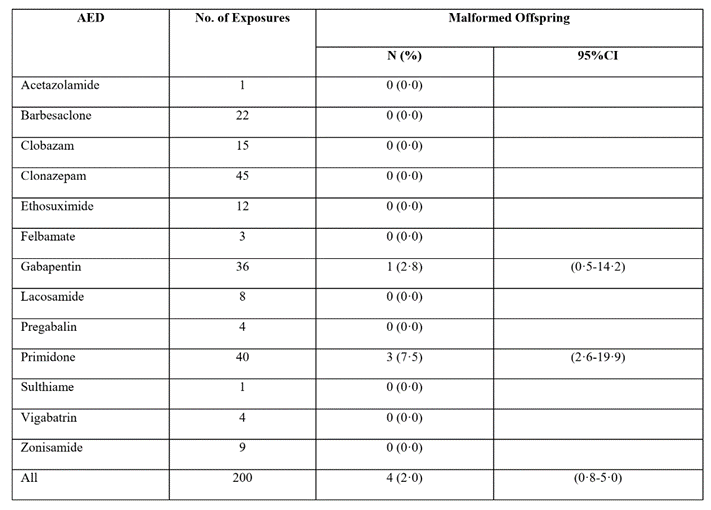
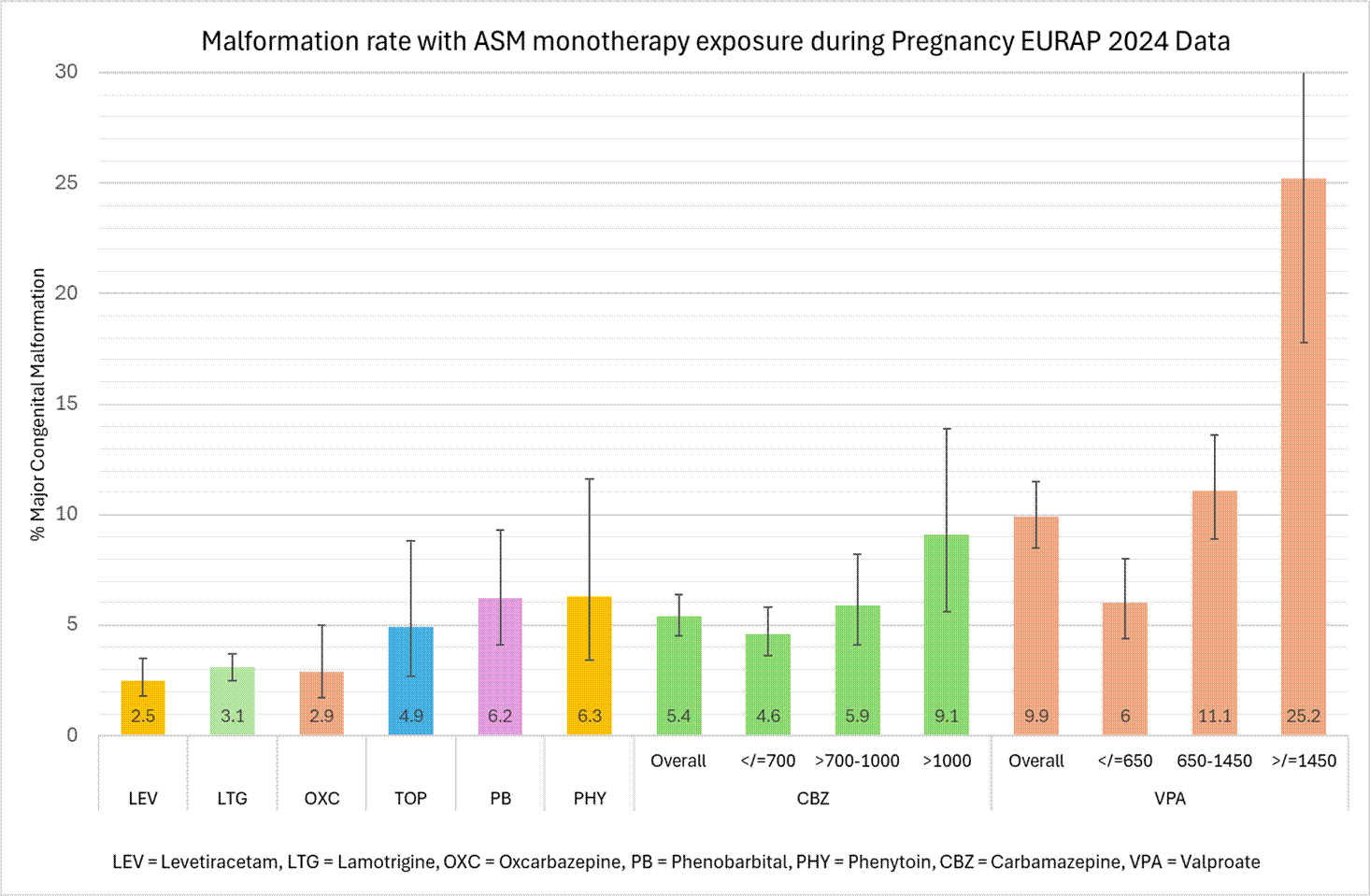
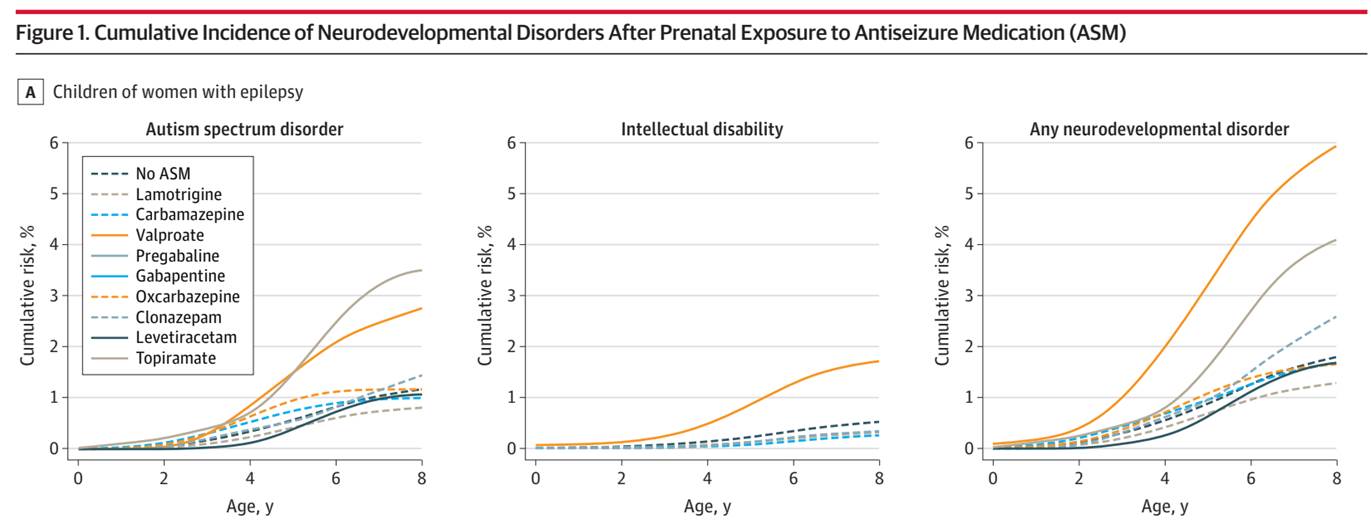
Risk of developmental disorders and other outcomes if exposed to monotherapy during pregnancy
|
|
NEAD |
Liverpool MNDG 2015 |
Small for gestational age* NEAD |
Other data |
|
|||
|
|
IQ at 4.5yrs |
IQ at 6yrs |
IQ at 6 years |
Risk ratio (adjusted) |
% |
|
|
|
|
Baseline risk |
|
|
Controls 107 |
|
5 |
|
|
|
|
|
|
|
No AED 104 |
|
|
|
|
|
|
Valproate |
96* |
98* <1g-104 >1g-94 |
</=800mg - 98 |
1.5 |
11 |
Associated with increased risk of autism and ADHD Decreased cortical thickness Significant increased risk of neural tube defects |
||
|
>800mg - 93 |
||||||||
|
Carbamazepine |
106 |
105 |
105 |
1.25 |
9 |
|
||
|
Lamotrigine |
106 |
108 |
103 |
1 |
8 |
|
||
|
Phenytoin |
105 |
108 |
|
0.8 |
5 |
|
|
|
|
Levetiracetam |
|
|
|
1.25 |
9 |
Study of 51 patients – similar developmental outcomes to controls |
|
|
|
Topiramate |
|
|
|
2.4 |
19 |
Quite high risk of small birth size Australian registry suggested particularly high risk if topiramate is
used in polytherapy. |
|
|
|
Gabapentin |
|
|
|
1.2 |
9 |
|
|
|
|
Oxcarbazepine |
|
|
|
1.4 |
11 |
|
|
|
|
Phenobarbital |
|
|
|
2.4 |
17 |
|
|
|
|
|
|
|||||||
|
|
|
|||||||
|
|
|
|||||||
|
Zonisamide |
|
|
|
1.9 |
15 |
McCluskey et al Seizure 2021 UK database -
Monotherapy MCM13% (3 cases) -
Polytherapy MCM 6.9% -
21% small for gestational age |
|
|
|
Perampanel |
|
|
|
|
|
Vazquez 2020 AAN poster -
99 pregnancies (EURAP) -
45 reached term – no MCM |
|
|
|
Lacosamide |
|
|
|
|
|
|
|
|
|
Ethosuxamide |
|
|
|
|
|
|
|
|
|
Clobazam |
|
|
|
|
|
|
|
|
|
Clonazepam |
|
|
|
|
|
|
|
|
Other factors affecting risk
• If a women has had a previous child with malformation on a certain drug then risk of recurrent malformation is much higher
o This has been demonstrated for valproate in Australian data – e.g. risk at 1000mg/day goes from ~11% to 27%
Type of malformations
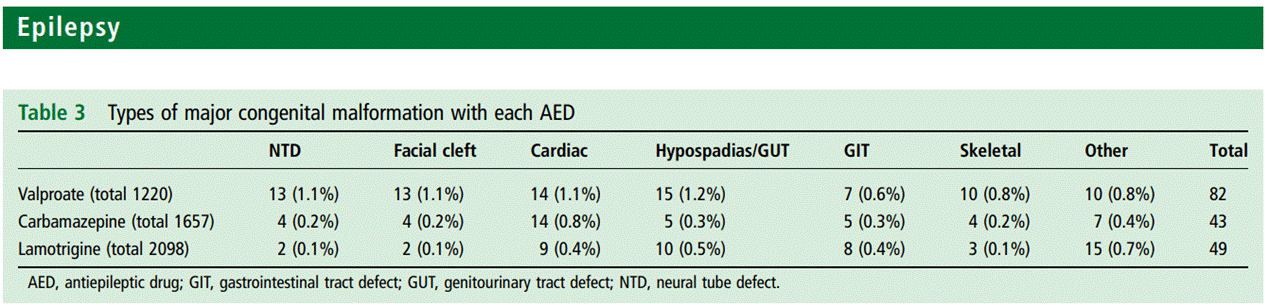
From UK registry JNNP 2014
Folate
· NEAD 6 yr study
showed improved IQ for periconceptional folate use (mean IQ - 108 vs 101)
· Folate
supplementation from 4 weeks pre-conception and during first trimester
associated with OR 3.9 reduction in risk of language delay (MoBa
Study - Husbye et al Neurology 91:2018)
· Rare evidence that
over-supplementation may adversely affect neurodevelopment (Murray et al. Nutr Rev 2017)
·
Dose
o
Literature supports 0.4mg-4mg/day
o
Proposed (RBWH) 1mg/day for 3 months prior to
pregnancy and 0.5mg/day through-out pregnancy
Pregnancy Studies
EURAP study
· European
· Published updates
2011, 2018, 2014
NEAD study
· Pregnant women on
monotherapy 199-2004
· F/U of child
development
· ~300 patients
· 4.5year F/U (Neurology 2012,
78:1207)
· 6
year F/U (Lancet Neurology 2013 12:244)
North American AED registry
· Neurology 2012;78:1692–1699
UK Ireland AED registry Levetiracetam results
· Neurology 2013;80:400–405
UK EPR subset
• Neurology 2014: 82:213
• Developmental scales - control vs LEV vs VPA
Effect of pregnancy on medication
|
|
Reduction in serum concentration |
Reduction in serum concentration (MONEAD study) JAMA Neurol 2022 |
|
|
Carbamazepine |
?unchanged |
Minimal change |
|
|
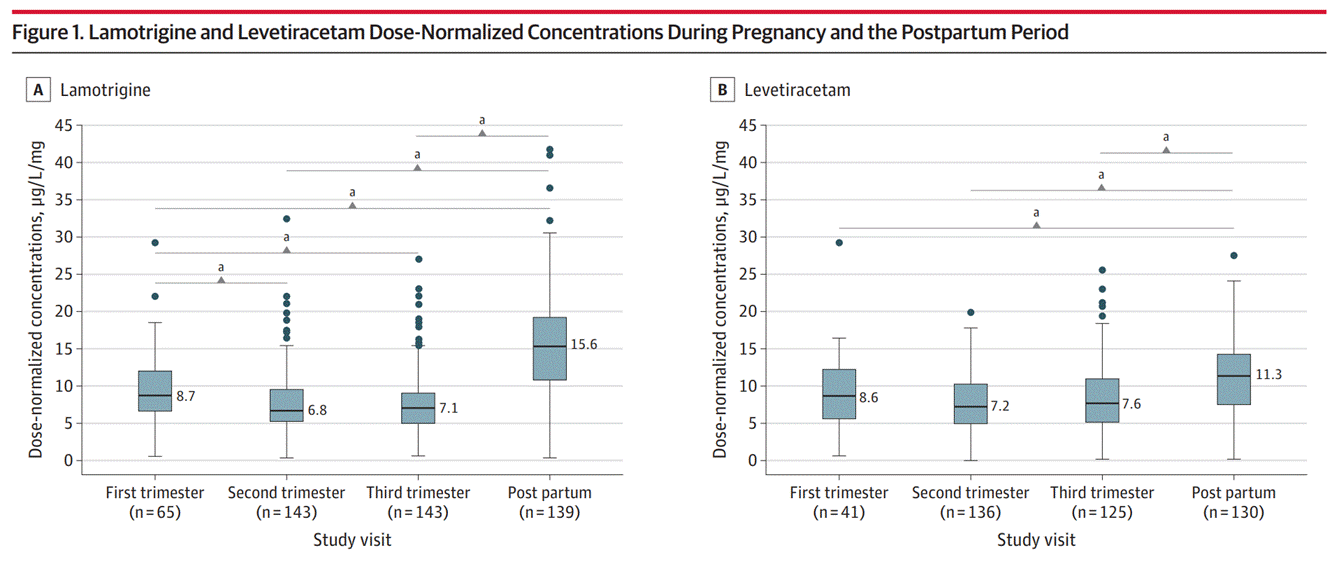
Lamotrigine |
50% (17%-70%) |
56% |
Increase in oestrogen driven glucuronidation Returns to normal within a few days post-partum MONEAD study found significant decrease in first trimester |
|
Levetiracetam |
50% (40-60%) |
36.8% |
Increased GFR and renal clearance Increased from first trimester then stable (MONEAD study found significant decrease in concentration from first trimester) |
|
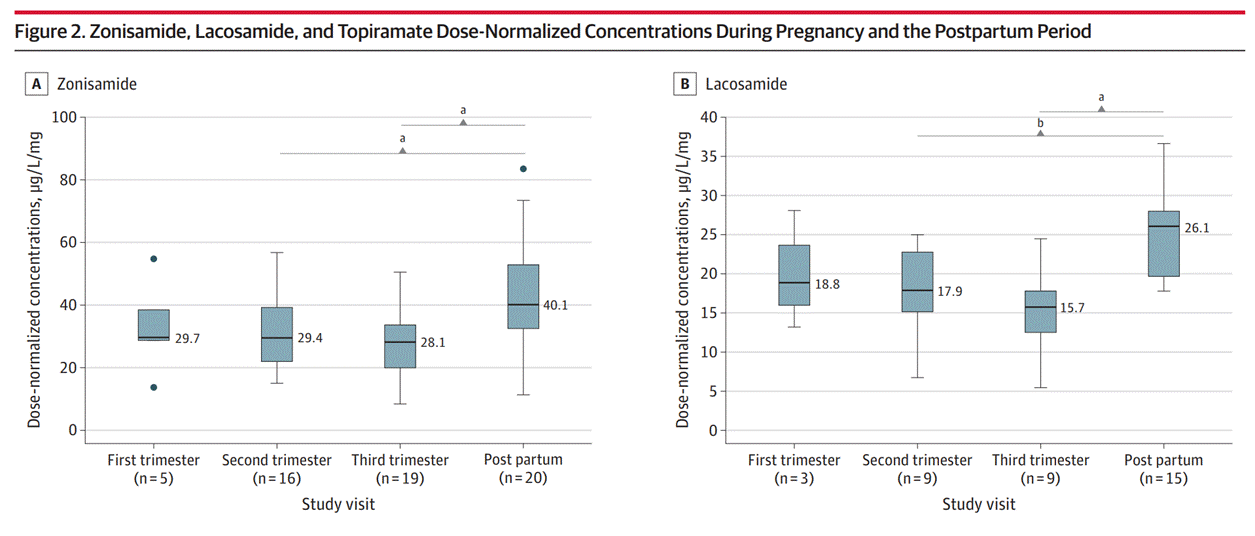
Lacosamide |
|
40% |
|
|
Phenytoin |
40% |
N/A |
|
|
Phenobarbital |
40% |
N/A |
|
|
Oxcarbazepine |
35% |
No change
(unbound) |
|
|
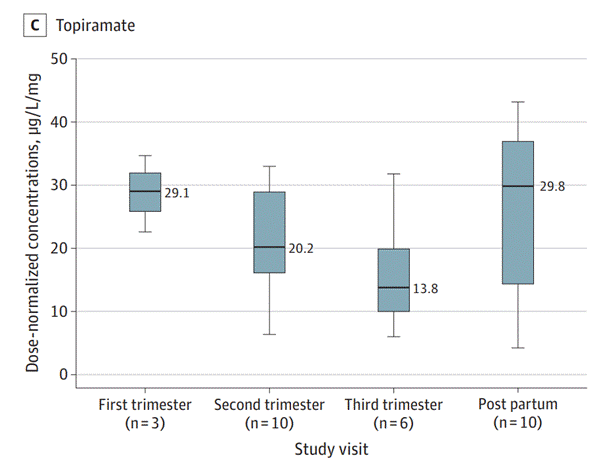
Topiramate |
35% |
Reduction NS |
|
|
Zonisamide |
30% |
29.8% |
|
|
Perampanel |
?2-4x decrease |
|
|
Lamotrigine
• Increase in oestrogen driven glucuronidation
• Decreases by a variable 60% during pregnancy
• Returns to normal within a few days post-partum
o Aim to return to long term dose by day 10
o Consider slightly higher dose (~extra 50mg) compared to pre-pregnancy
MONEAD Study results
Breast Feeding
• Overall data suggests IQ of breastfed infants is higher than non-breast fed – even if the mother is taking AED
|
Drug |
Dose (%)
acquired from breast milk ** |
Infant to mother
concentration*** |
|
|
Phenobarbital |
>50 |
|
|
|
Lamotrigine |
>50 |
30% (up to ~80%) |
50 infants – one apnoea with very high dose, IQ studied in 30 children
– no effect |
|
Levetiracetam |
High transfer to
milk, but low infant serum conc. |
5% (up to 20%) |
No adverse effects noted in small numbers. |
|
Ethosuximide |
>50 |
|
|
|
Topiramate |
High transfer to
milk, but low infant serum conc. |
|
No adverse effects noted in small numbers. |
|
Carbamazepine |
<5 |
5% (up to 6%) |
|
|
Phenytoin |
<5 |
|
|
|
Valproate |
<5 |
|
|
|
Zonisamide |
High milk
transfer, high infant dose |
45% (?up to 65%) |
No adverse effects noted in small numbers. |
|
Gabapentin |
High milk
transfer, low infant serum conc. |
|
6 infants – no adverse effects |
** This is the % of the minimum recommended infant dose that a fully
breast-fed infant would acquire.
*** MONEAD study (Birnbaum JAMA Neurol 2019)
• Phenobarbitone is the only medication which is clearly likely to be a problem and can cause drowsiness etc. in the infant.
Specific drugs
Brivaracetam
Mechanism
• Binding to SV2A – 20x affinity compared to levetiracetam
• Higher brain permeability than levetiracetam
•
Metabolism
• T1/2 – 9 hours
• Renal excretion after extensive metabolism in liver – hydrolysis and to a lesser extent CPY2C19
Interactions
• Clearance increase by enzyme inducers
• May increase carbamazepine and phenytoin levels by up to 20%
• Overall no clinically significant
interaction with any other AEDs noted
• No
effect on oral contraceptive pill
• Not effective in combination with levetiracetam
Side effects
|
|
Diff from placebo % |
BRIV |
Placebo |
|
Somnolence |
6.7 |
15.2 |
8.5 |
|
Dizziness |
4.0 |
11.2 |
7.2 |
|
Fatigue |
5.0 |
8.7 |
3.7 |
|
Irritability |
2.1 |
3.2 |
1.1 |
Efficacy
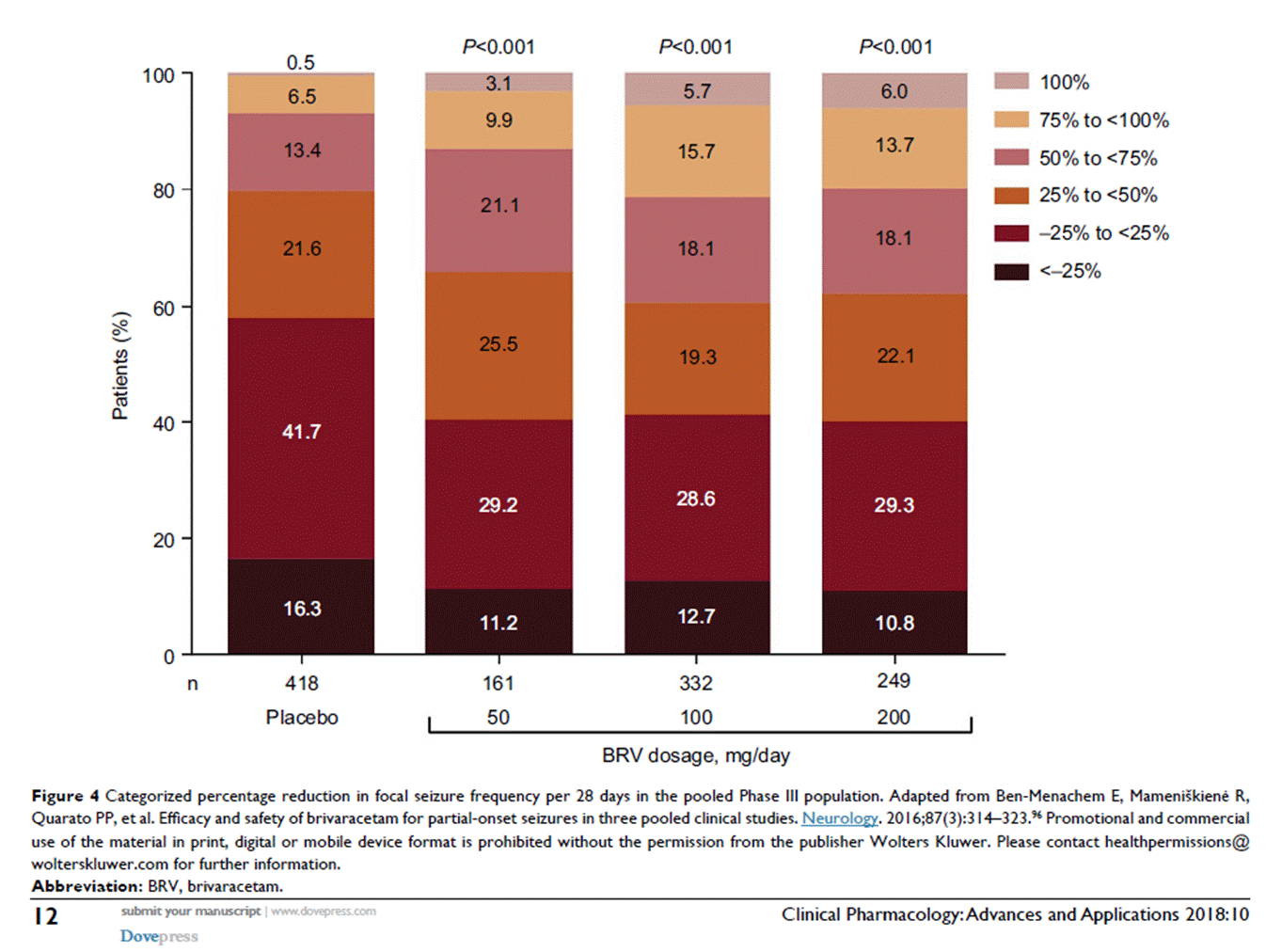
• Pooled analysis of Phase 3 trials (as an adjunctive therapy for focal epilepsy) (2016):
|
|
Placebo |
50mg/day |
100mg/day |
200mg/day |
|
% reduction in Sz
over placebo |
- |
19.5 |
24.4 |
24.0 |
|
>50% reduction |
20.3 |
34.2 |
39.5 |
37.8 |
|
Seizure free |
0.5 |
2.5 |
5.1 |
4.0 |
• Efficacy from pooled phase 3 trials as adjunctive treatment for focal epilepsy (2016):
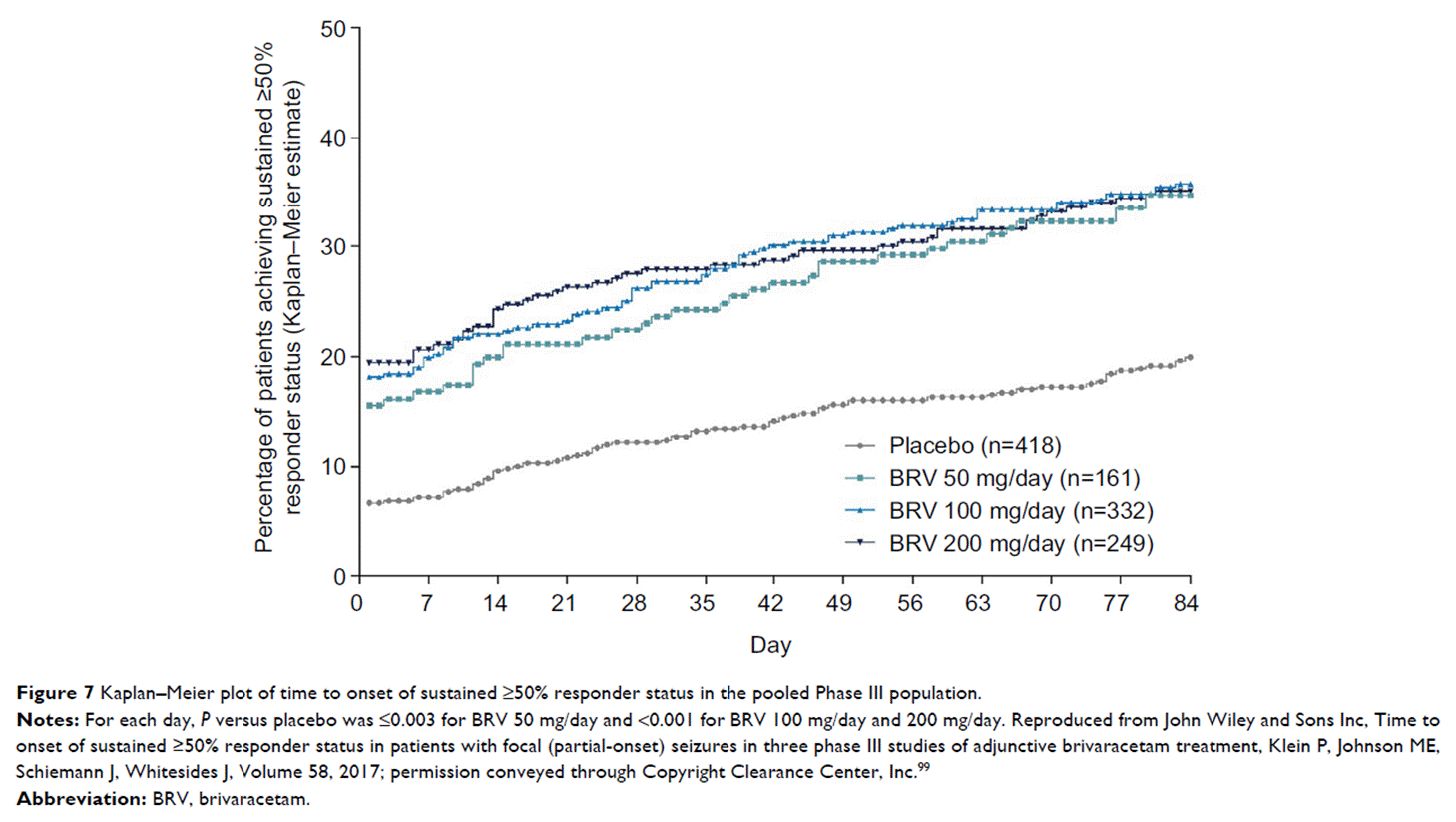
• Response over time from pooled phase 3 trials as adjunctive treatment for focal epilepsy (2016):
o Conclusion: ?higher dose achieves faster response, however in the end no difference
Dosing
• Statistically significant difference in response from 50mg/day vs 100mg/day, however no overall benefit in going to 200mg/day
• Side effects slightly higher on 100mg/day vs 50mg (however no great difference between 100mg/day and 200mg/day)
• No demonstrated need for titration
• Based on above data would suggest
o Start 50mg/day and increase to 100mg/day if no response after 1-2 months
o Should rarely consider going to 200mg/day, however unlikely to cause worsening of side effects.
• Comes as 25, 50, 75, 100mg tablets and 10mg/ml liquid
• Cost: $163.75 /month for 50mg/day.
Zonisamide
• Synthesized in 1974
• Licensed in Japan in 1989, USA 2000
• Peak plasma 2-6hrs
• Bioavailability >95% (not affected by food)
Interactions
o Half life reduced by phenytoin, phenobarbitone and carbamazepine (which induce 3A4)
o Does not effect plasma levels of other AEDs
• Elimination – hepatic/renal
o Metabolised by CYP3A4
• Haltf life 63hours
Side effects
• Side effects shown to have a dose dependent effect include:
• Dizziness (12%)
• Somnolence (14%)
• Tiredness (8.5%)
• Weight loss (7%)
• Other reported side effects
• Nausea and vomiting
• Drop out due to side effects ~27% at 500mg dose
• Serious adverse effects
• Metabolic acidosis
• Similar to placebo
Effectiveness
• Trial as add on in CPS (2005)
• ZNS 500 mg/day produced a greater median reduction in CPS frequency than placebo (51.2% vs 16.3%, p<0.0001)
• 300mg and 500mg produced statistically significant effects, 100mg did not
• Trial in mixed population of focal and generalised seizures showed efficacy in both groups (higher in generalised epilepsy group!)
Dosing
• Initially, 25 mg twice daily; increase after 1 week to 50 mg twice daily; then increase, at weekly intervals, by up to 100mg daily according to response.
•
• Maintenance, usually 300–500 mg daily in 1 or 2 doses.
•
• Lower doses may be effective in some people, including those not taking carbamazepine, phenytoin or other CYP3A4 inducers.
•
• CrCl <20 mL/minute, mild-to-moderate hepatic impairment, patients not taking a CYP3A4 inducer, titrate dosage at intervals of 2 weeks.
Lacosamide
Initially, 50 mg twice daily, increased after 1 week to 100 mg twice
daily.
If needed, increase dose by 50 mg twice daily each week;
maximum 200 mg twice daily.
Evidence that combination with non-sodium channel blocking drugs:
increases efficacy (50% seizure reduction response rate with 400mg daily was
40% vs 62%) and decreases side effects.
(Sake et al CNS drugs 2010 post hoc analysis)
Oxcarbazepine
Barcs G, Walker EB, Elger CE, et al. Oxcarbazepine placebo-controlled,
dose-ranging trial in refractory partial epilepsy. Epilepsia.
2000;41(12):1597-1607. doi:10.1111/j.1499-1654.2000.001597.x
Perampenal
Mechanism
Pharmacokinetics
•
|
|
Monotherapy |
CYP3A4 inducer |
|
Absorption |
Tmax 0.5-2.5h |
|
|
Food |
Tmax delayed 2-3hours |
|
|
Bioavailability |
100% |
|
|
Protein binding |
95% |
|
|
Distribution |
Vd =1.1L/kg (body water) |
|
|
Plasma Half life |
48hours |
25hours |
|
Time to steady state |
10-19days |
|
|
Metabolism |
CYP3A4 to various metabolites |
|
|
Route of elimination |
70% faeces, 30% urine |
|
|
Plasma target range |
180-980ug/L (515-2803nmol/L) |
|
|
Interactions |
|
|
|
Inducer |
No |
|
|
Inhibitor |
No |
|
|
Of perampanel on others: |
35% increase in oxcarbazepine, small decrease in OCP at high dose, otherwise minimal impacts |
|
|
Effect of other drugs on peramanel: |
CYP3A4 enzyme inducers decrease concentration |
|
|
Dosing: |
|
|
|
Start dose |
2mg |
2mg |
|
Titration increment |
2mg |
2mg |
|
Titration interval |
2 weeks |
1 week |
Hepatic disease
• Metabolism was different – up in some cases, down in others
• Overall steady state will probably take longer to achieve and so slower titration may be appropriate
Renal disease
• Renal impairment not expected to have a significant effect
• However not well studied in this population and should probably be avoided in severe renal impairment
Pregnancy
• Some effects in animals at high doses
• Australian Category B3
• Vazquez et al. Perampanel and pregnancy, Epilepsia 2021
o 48 pregnancies went to term – no abnormalities
o 28 did not reach term – reasons not all known - no evidence of higher than expected foetal malformation
Effectiveness
• 3 major phase III trials – all in patients with refractory focal epilepsy:
o 304
o 305
o 306
• All with slightly different doses and populations
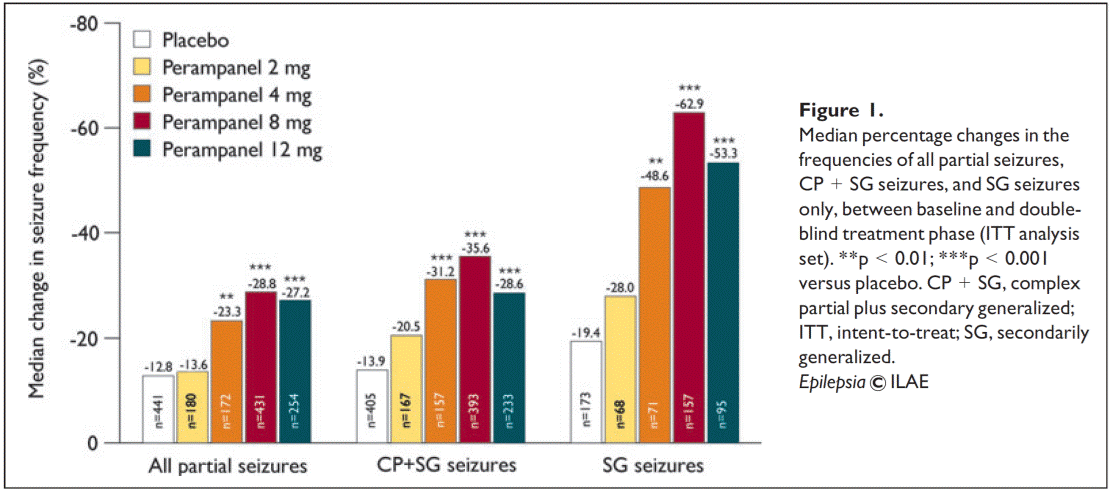
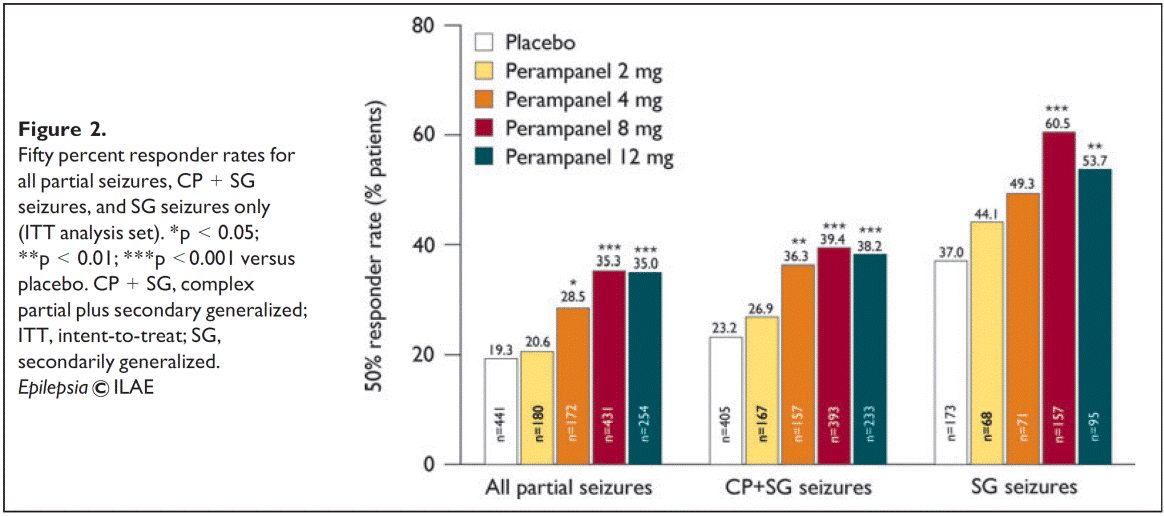
Pooled phase III results
• Population
o Age 33-36yrs
o Caucasian 60-80%
o Epelepsy diagnosis ~20years
o Refractory seizures – average 9-14/28 days
o 70% secondary generalised
o >80% had failed 2 or more AEDs
o All were on at least on other AED, most were on 2 or 3
Treatment of Genetic Generalised Epilepsy
• French et al. Neurology 2015
• RCT 164 patients
• GGE with GTCS
• Titrated to 8mg daily
• Median % seizure change -38% vs -77%
• 50% responder rate 40% vs 64%
• Seizure freedom 12% vs 31%
• Similar adverse events to previous studies
• No exacerbation of other seizure types.
Side effects
Withdrawal due to adverse events:
|
Dose |
% Withdrawal |
|
Placebo |
4.8% |
|
2 |
6.7% |
|
4 |
2.9% |
|
8 |
7.7% |
|
12 |
19.2% |
|
Overall |
9.5% |
Adverse effects (pooled phase 3)
|
|
Placebo |
4mg |
8mg |
12mg |
|
|
Dizziness |
9 |
16 |
32 |
43 |
|
|
Headache |
11 |
11 |
11 |
13 |
NS |
|
Somnolence |
7 |
9 |
16 |
18 |
|
|
Fatigue |
5 |
8 |
8 |
12 |
|
|
Irritability |
3 |
4 |
7 |
12 |
|
|
Nausea |
5 |
3 |
6 |
8 |
|
|
Falls |
3 |
2 |
5 |
10 |
|
|
Ataxia |
0 |
0 |
5 |
3 |
|
|
Psychiatric: |
|
|
|
|
|
|
Aggression |
0.5 |
0.6 |
1.6 |
3.1 |
|
|
Anger |
0.2 |
0 |
1.2 |
2.7 |
|
|
Depression |
1.6 |
0.6 |
0.7 |
2.4 |
|
|
Anxiety |
1.1 |
1.7 |
3.0 |
3.5 |
|
• Psychiatric adverse events, in particular aggression, were higher in adolescent subgroup (small numbers).
Average weight gain of ~1.8 kg on perampanel - ~3-5% of patient report significant weight gain
Rufinamide
Dosing
Side Effects
Increased Liver Function Tests
Suggested criteria for stopping AED:
· ALT >10xULN on
one occasion
· ALT >3xULN
persistently (Over 3-6 months)
· Bilirubin >40
or >2xULN
·
Long term risks:
Cardiovascular risk with enzyme inducing drugs
• Large retrospective cohort study - (Josephson CB et al. Association of enzyme-inducing antiseizure drug use with long-term cardiovascular disease. JAMA Neurol 2021 Nov; 78:1367.)
o Hazzard ratio for cardiovascular disease in whole group 1.21. This drops to 1.06 if stricter definition of epilepsy is used.
o Difference became apparent after ~10 years
o Dose dependent