Neurofibromatosis
NF1
• Autosomal
dominant
• Loss
of function mutation of NF1 tumour suppressor gene
o
Ras MAP kinase pathway
• 1/1900-1/3500 people
• Variable severity of disease between and within family
• Can ne mosaic
Clinical
Nerve sheath tumours
• Plexiform neurofibromas
• MPNST
Skin changes
• Café-Au
Lait spots – hyperpigmented macules or patches seen in various regions in the
body
• Freckling – hyperpigmented areas smaller in size than café-au lait spots most prominent in the axillary and inguinal regions
Occular changes
• Lisch
Nodules – pigmented iris hamartomas. Benign, elevated, tan-colored
iris nodules.
• Optic nerve glioma (see below)
Malignancy
Malignant peripheral nerve sheath tumour
• evolve from plexiform neurofibroma (benign congenital lesion affecting 50%)
• Screening
for Malignant Peripheral Nerve Sheath Tumours MPST - HELP
o
Hardness
o
Enlarging
o
Limb numbness or weakness
o
Pain
Breast cancer – 3.5x risk
Pheochromocytoma
Slightly increased risk of a number of other cancers
Optic nerve glioma
- 15-20% of patients
- 30-50% of these will be symptomatic
- Rarely develop after the age of 7
- Surgical treatment rarely an option
- Rarely radiation
- Chemotherapy can be considered
Hypertension
Essential hypertension and secondary to pheochromocytoma
Bone health
Osteoporosis – high incidence
Bone dysplasia
Neurocognitive and Psychiatric
Depression
ADHD
Cognitive impairment – occurs at higher rate in NF1
Pain
Headache
Peripheral neuropathy
Fingertip pain (glomus body)
Vasculopathy / Moya moya
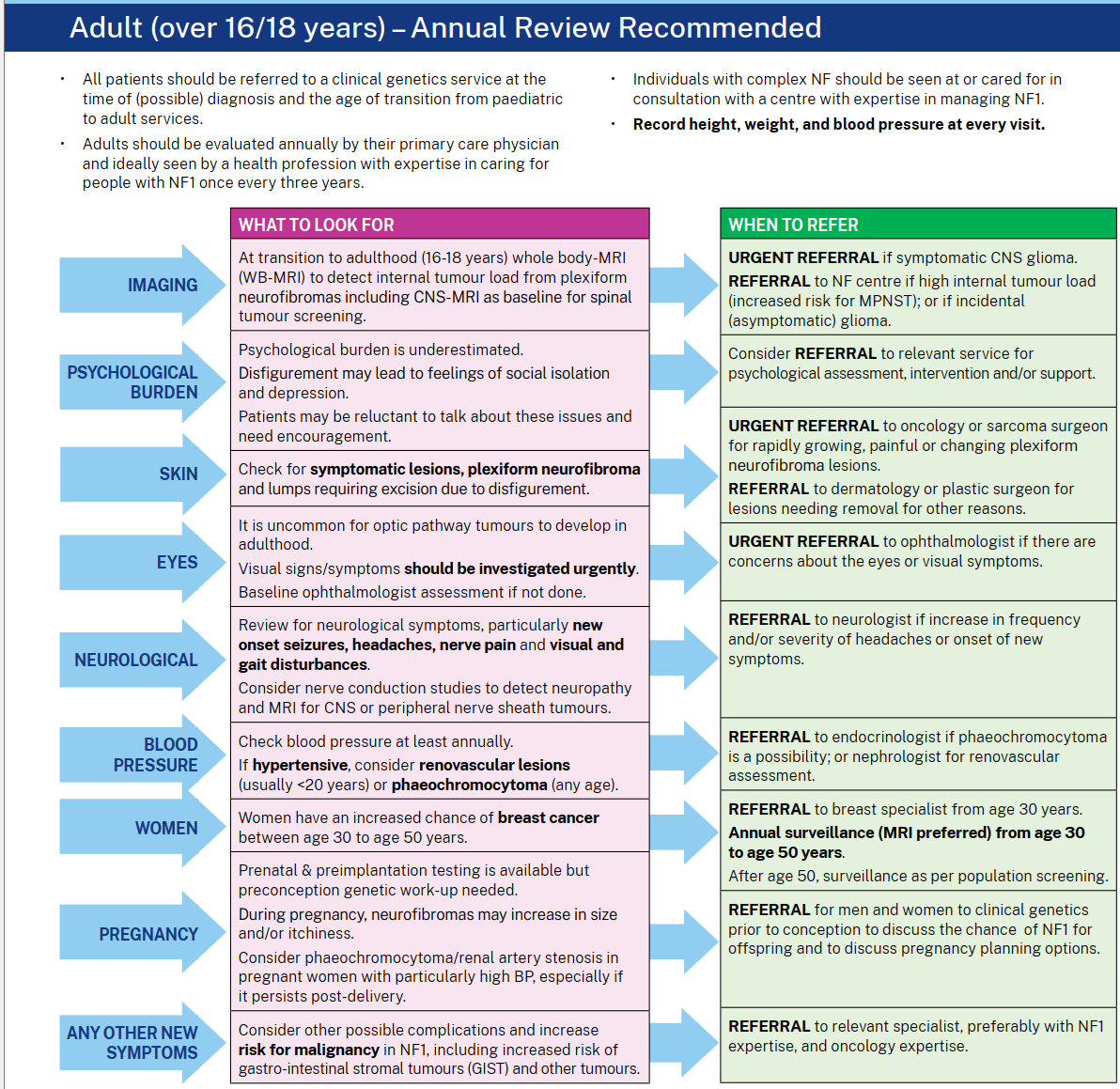
Screening checklist (EviQ, 2026)
Treatment
Mek inhibitors for plexiform neurofibromas
- Selumetinib
-
Trametinib
-
Mirdametinib
- SE:
Skin toxicity
NF2
• Autosomal dominant
• However mosaicism common
• >50% are first in family
• Mosaicism common
• Clinical
o Vestibular schwannoma, often bilateral
o Meningioma
o Ependymoma
o
Early-onset cataracts usually bilateral
Decreased life expectancy
Treatment of VS
• Surgery often results on hearing loss
• If hearing already lost then surgery may be best option
• If hearing preserved consider radiation Bevacizumab, Brigatinib
References
· ACMG Practice guidelines “Care of adults with NF1” Genetics in Medicine 2018