Ptosis
|
|
Other signs |
|
|
Neurogenic |
Usually poor
LF |
|
|
Sympathetic
nerve lesion/Horner syndrome |
Meiosis Anhydrosis Cervical
lymphadenopathy |
|
|
CN3 palsy |
Other EOM
weakness Mydriasis Other cranial
nerve or brainstem signs |
|
|
NM Junction |
|
|
|
Myasthenia gravis |
Variable/fatigable
- Improves with ice test Normal pupils Weakness of
EOM/eyelid closure Systemic
weakness/ dysphagia |
|
|
Congenital myasthenia
syndrome |
|
|
|
Myogenic |
Usually very poor LF |
|
|
CPEO (and other
mitochondrial disease) |
Associated
global reduced EOM function |
|
|
Myotonic
dystrophy |
Reduced eyelid closure
strength |
|
|
Muscular dystrophy
(FSH, oculopharyngeal) |
|
|
|
Myositis |
Pain |
|
|
Infiltration |
Exophthalmos |
|
|
Thyroid eye
disease |
|
|
|
Mechanical |
Generally good LF |
|
|
Aponeurotic
dysfunction (stretch/dehiscence) |
|
|
|
Mechanical
obstruction |
Lid abnormality
(e.g. chalazion) |
|
|
Pseudoptosis |
|
|
|
Contralateral lid
retraction |
|
|
|
Enophthalmosis |
|
|
|
Duane syndrome |
|
|
|
Hemifacial
spasm |
|
|
|
Brow ptosis |
|
|
|
Hypertropia |
|
|
Examination
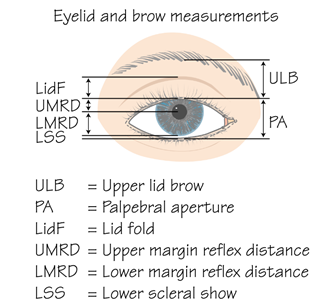
· Bilateral or unilateral ptosis
· Measure:
o Height of eyelid crease/lid fold
o Palpebral aperture/fissure (NR 9-12mm)
o Marginal reflex distance 1 (upper) (NR 4-5mm)
o Marginal reflex distance 2 (lower)
o Levator function (LF) - (upper eyelid excursion from full downgaze to full upgaze)
§ Normal >10-12mm
§ Moderate 5-10mm
§ Poor <5mm
· Eye movements
· Prolonged upgaze (look for change in PA/MRD)
Special test
Progressive